
The day after Thomas’ funeral I visited Father F.
“I feel so angry with God,” I confessed. “All the doctors told me that there was little possibility that Thomas would live after birth, but I refused to accept that. I told them that there was a greater Power than them. I insisted God could heal our baby.”
I had on many occasions voiced my faith in God. The doctors had looked at me with pity. Why wouldn’t I just accept their prognosis? Why did I keep burying my head in the sand, unable to accept reality? They didn’t think God would help me. I hoped so much He would.
But the doctors had been right and I’d been wrong. God hadn’t come to my rescue.
“God just doesn’t care about me,” I said to Father. “He doesn’t love me. Why did He allow such suffering when I was willing to profess my faith in Him? It wasn’t easy going out on a limb telling those doctors I had full confidence in God. Maybe they thought I was crazy.”
And then I said, “I’ve decided I’m never going to Mass again.”
Father told me a story. When he was a seminarian in Vietnam, he was imprisoned with other seminarians and priests. All he’d wanted to do was give his life to God and God had allowed Father F to be imprisoned. It didn’t seem fair. He wanted to do good work for God and there he was shut up in a cell. He had survived by eating rats. He had suffered. And he felt that God had abandoned him. “I thought that God didn’t care about me at all,” he finished.
Then Father gave me a hug, a hug from one sufferer to another. Tears flowed down my face and my body shook and Father held me. He understood.
A few minutes later, I dried my eyes and attempted a smile. “Well, I guess I’ll see you at Mass on Sunday after all,” I said.
Father smiled. Yes, he understood.
I think about the apostles when Jesus said they must eat His flesh and drink His blood if they wanted eternal life.
After this many of his disciples drew back and no longer went about with him. Jesus said to the twelve, “Do you also wish to go away?” Simon Peter answered him, “Lord, to whom shall we go? You have the words of eternal life; and we have believed, and have come to know, that you are the Holy One of God.”
“To whom shall we go?” The apostles didn’t understand but they knew Jesus alone had the words of eternal life. He was the Son of God and they believed.
I also didn’t understand. Why did God allow Thomas to die? I had tried so hard to stand up and proclaim my Faith in Him. Why was I suffering? I had no idea but I knew I had to trust Him.
So I turned to God. There was nowhere else for me to go. For who else could bring me through the pain? I knew I couldn’t survive on my own. I needed God.
And He didn’t let me down. I survived.
One day, I am sure, just like the apostles, I will understand why God allowed Thomas to die. Even now, I catch glimpses of the meaning of God’s plan. But to understand fully is no longer important. “You have the words of eternal life and we have believed.” I believe. That is all that really matters.
If you would like to share more of my grief stories, please visit my blog Sue Elvis Writes


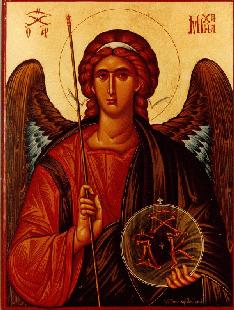


 Then nine months later, we experienced a miscarriage at around six weeks in utero. While a little less devastating — because we only knew of little Innocent for two weeks — it nonetheless reopened our deepest wounds. Again, Brighid has been fully engaged: just last week she told us Innocent was a boy. We still don’t know if she had a dream about him, or what, but she speaks as if she saw him.
 Regarding being less certain of things than we once were: it is the hope and hubris of youth, to impose our wills upon the world, to assert our ideas as certainties and to promote our ideals as truths. I have Faith — “the realization of what is hoped for and evidence of things not seen” — that God is Love, that Love itself is a mystery, and therefore God is the unending font of the mystery of Love. I mean to say, albeit in a wordy way, that I believe a healthy sense of mystery is not only permissible, but usually required for a mature, honest relationship with God. I’m not without my doubts, but neither was Saint Thomas, and though Jesus mildly corrected him, He did not reject Thomas for his doubt. Likewise, God did not abandon Job, even when he doubted and cried out at the injustice of being deprived of an objective good (his children).
 I’ve been meditating on Job’s story quite a bit. One mystery I keep coming back to: God withheld any response from Job until Job demanded an answer. Granted, God’s response was a bit frightening, and definitely humbling, but also consoling (paraphrased): “I am God, the Almighty, maker of Heaven and Earth. You are not being punished. I have my reasons, and they are beyond you. Humble yourself and trust me. I will restore you.” A very patient fatherly correction. Contrast that with God’s response to Job’s friends: “I am angry with you. You have not spoken rightly concerning Me, as has my servant Job. Let my servant Job pray for you; for his prayer I will accept, not to punish you severely.” Not only does He call their “prosperity gospel” a lie, He calls Job His servant, and holds Job up as the standard by which his friends should measure themselves.
 The Apostolate of Hannah's Tears